How Home Bakers Transition to a Bakery Business Using Social Media as Proof of Concept
The traditional path from home baker to bakery owner used to require a leap of faith: sign a lease, build out a kitchen, open the doors, and hope the…
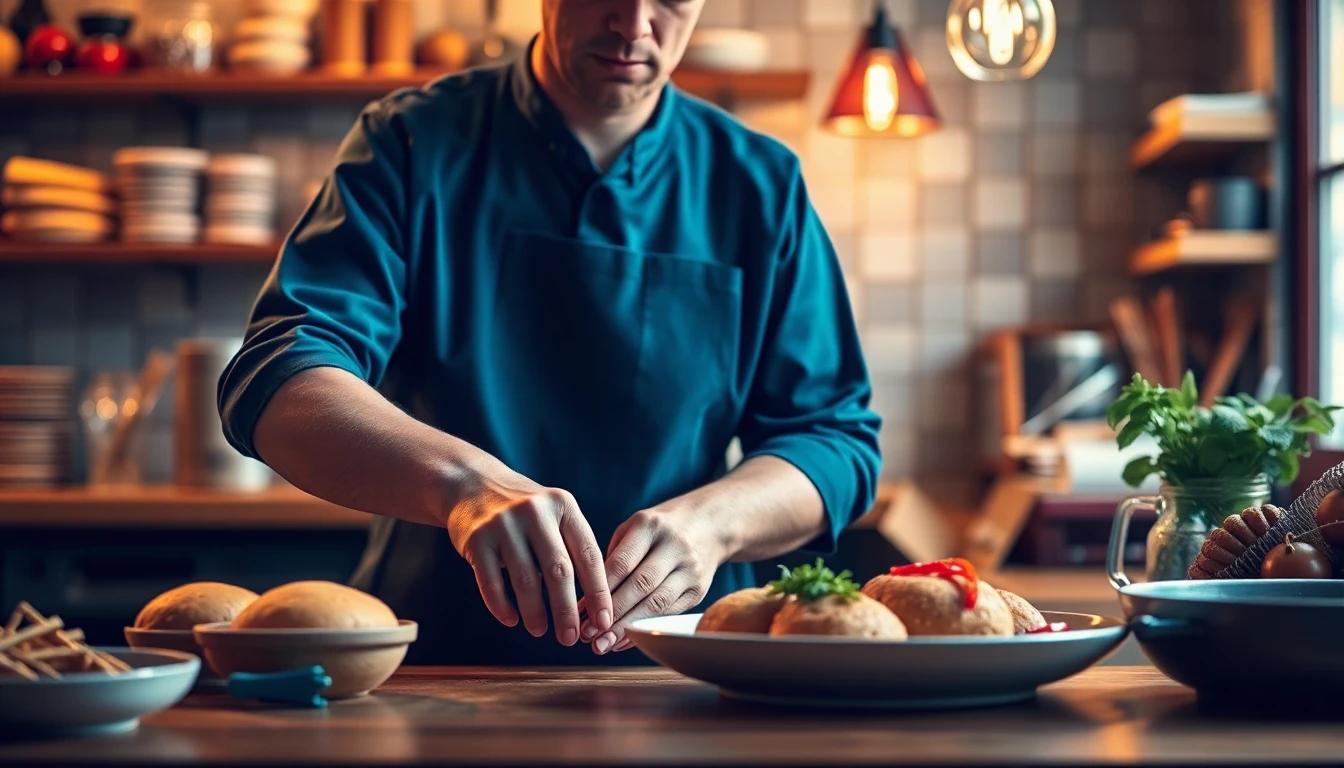
How Home Bakers Transition to a Bakery Business Using Social Media as Proof of Concept
The traditional path from home baker to bakery owner used to require a leap of faith: sign a lease, build out a kitchen, open the doors, and hope the demand you imagined actually materializes. Many failed, not because they couldn't bake, but because they skipped the step where the market told them whether it wanted what they were making.
Social media changed the sequence. Now the smart path looks like this: sell from your kitchen under your state's cottage food laws, document every bake on Instagram, build a following that pre-orders, and use your waitlist, order volume, and engagement data as the business case for the lease. When demand exceeds your kitchen capacity, you already have the proof.
This is not a hypothetical approach. It's how a meaningful number of successful independent bakeries are starting in 2026.
The Cottage Food Foundation
Most U.S. states have cottage food laws that allow home bakers to produce and sell shelf-stable baked goods (breads, cookies, cakes, brownies, jams) directly to consumers without a commercial kitchen license. The regulatory environment has been actively expanding. Texas raised its cottage food sales cap to $150,000 in 2026. Multiple states have raised caps from $25,000 to $50,000 or higher. North Dakota now even allows out-of-state online sales. Farmers' markets reported a 22% increase in cottage food vendors in the first half of 2026 compared to the same period in 2024.
The combination of more permissive laws and lower barriers to digital sales means a home baker can now legitimately build a real revenue stream before ever signing a commercial lease. That revenue stream, and the social media following attached to it, is your proof of concept.
Stage One: Sell From Your Kitchen, Document Everything
The first stage is exactly what it sounds like. You bake, you sell through direct orders and at farmers' markets, and you document the entire process on Instagram.
What documentation means here: post every bake. The croissants laminating at 6am. The finished tray before it goes into its packaging. The customer picking up their order at the door. The farmers' market setup on Saturday morning. The sold-out sign at 11am. The DMs asking if you take orders.
This documentation serves two purposes simultaneously. For your followers, it builds the kind of familiarity and trust that drives pre-orders and referrals. For your future investors or landlords, it becomes a living record of real demand. The baker who can show a landlord six months of Instagram content demonstrating consistent sell-outs and a 2,000-person following in their local market is a fundamentally different risk proposition than the baker who shows up with a business plan and a hope.
Stage Two: Build the Pre-Order System
Pre-orders are the mechanism that converts Instagram following into business data. When you shift from "I make baked goods and sell them occasionally" to "I open pre-orders every Sunday at noon and they close within two hours," you have a waitlist business, and waitlist businesses have demonstrable demand.
The setup is straightforward. Decide your weekly or bi-weekly bake date. Post the menu 48–72 hours in advance ("Saturday's bake: sourdough boules, cinnamon rolls, brown butter chocolate chip cookies: pre-order opens Sunday 12pm"). Use Instagram Stories to build anticipation in the days before. Open orders through a simple form (Google Forms, Square, or a basic website). Set a cap that matches your kitchen capacity. Close orders when that cap is reached.
Document the close-out. "Sunday pre-orders are full: join the waitlist for next week's bake." This content is both honest marketing and data collection. Every sell-out is evidence of constrained supply meeting real demand.
Stage Three: Use Your Data to Make the Commercial Case
After three to six months of consistent selling, you have something most bakery business plans don't: actual sales history. You know your average revenue per bake cycle, your most popular products, your customer retention rate (how many pre-order customers are repeat buyers), and the size and engagement rate of your social following.
This data is what makes the leap to commercial space financially defensible rather than emotionally driven. The key thresholds to watch:
You're regularly selling out before you can fill demand. This means the limiting factor is capacity, not customers: exactly the business case for commercial kitchen space.
Your monthly revenue is consistently approaching your state's cottage food cap. Texas bakers approaching $150,000 in annual revenue ($12,500/month) have a clear signal. For states with $50,000 caps ($4,200/month), that threshold comes faster.
Your waitlist is meaningful. A waitlist of 50–100 people who want product you can't make yet is a committed customer base. That's not hope, that's evidence.
Stage Four: The Transition
The transition from cottage kitchen to commercial space doesn't require buying a building. Most bakers start with one of two paths: renting time in a shared commercial kitchen (typically $15–$30/hour), or leasing a dedicated commercial space with build-out.
Shared kitchen rental is the lower-commitment first step. It lets you increase production capacity, test your recipes at volume, and build operational systems without signing a long-term lease. Your Instagram following becomes your pre-launch customer base when you make the announcement: "We're moving to a commercial kitchen: bigger batches, new products, and we're opening the waitlist."
That announcement post, if you've built your audience well, generates more pre-orders in 24 hours than most new bakeries see in their first month.
What Social Media Is Actually Doing Here
Social media in this context is functioning as three things at once: your sales channel, your marketing engine, and your market research tool. Every post that gets saved tells you which products resonate. Every sold-out pre-order proves demand. Every DM asking "when are you opening a shop?" is a market signal.
The bakers who treat Instagram as a documentation tool from day one (who post every bake with intention, build a consistent aesthetic, and document their growth honestly) arrive at the commercial transition with something most food entrepreneurs never have: a proven, quantified audience that already wants to buy from them.
ForaPost creates and schedules your bakery's content in advance, so your weekly pre-order announcements, bake documentation, and product drops publish on time every week, even when you're elbow-deep in dough.
Ready to put your social media on autopilot?
Join thousands of small businesses using ForaPost to grow their online presence with AI.
Start FreeFrequently Asked Questions
What Social Media Is Actually Doing Here?
Social media in this context is functioning as three things at once: your sales channel, your marketing engine, and your market research tool.
What is the cottage food foundation?
Most U.S. states have cottage food laws that allow home bakers to produce and sell shelf-stable baked goods — breads, cookies, cakes, brownies, jams — directly to consumers without a commercial.
What is Stage One: Sell From Your Kitchen, Document Everything?
The first stage is exactly what it sounds like. You bake, you sell through direct orders and at farmers' markets, and you document the entire process on Instagram.
What is Stage Two: Build the Pre-Order System?
Pre-orders are the mechanism that converts Instagram following into business data.
What is Stage Three: Use Your Data to Make the Commercial Case?
After three to six months of consistent selling, you have something most bakery business plans don't: actual sales history.
Related Posts
How Food Trucks Build a Cult Following: Scarcity, Routine, and Social Media
Food trucks build loyal followings through scarcity, routine, and social media FOMO, not just good food. Here's how the pattern works.
Sep 28, 2026
LinkedIn for Caterers: Landing Corporate Contracts Through Thought Leadership
How catering companies use LinkedIn to win corporate clients: post about scale and logistics, show the team, and connect with event planners directly.
Aug 24, 2026
How Small Caterers Use Instagram to Compete With Big Catering Companies
How a small caterer uses Instagram to compete with large companies: show the owner, the process, and the story behind the menu, then post every week.
Aug 18, 2026