The Food Truck Owner's TikTok Playbook: How to Turn Your Daily Route Into Viral Content
Most food truck owners who try TikTok make the same mistake: they treat it like Instagram. They post a single photo-style clip of their signature dish, add a...
The Food Truck Owner's TikTok Playbook: How to Turn Your Daily Route Into Viral Content
Most food truck owners who try TikTok make the same mistake: they treat it like Instagram. They post a single photo-style clip of their signature dish, add a trending audio track they found on a list somewhere, and then check back the next morning to find 47 views and zero new customers.
TikTok is not Instagram. It is not a portfolio. It is not a place to announce things.
It is a discovery engine that actively looks for content worth showing to strangers, and the strangers it sends your way can become a lunch line. But only if you understand what the algorithm actually rewards. Here is the playbook.
Why Food Trucks Have an Unfair Advantage on TikTok
The TikTok algorithm does not distribute content to your followers first. It tests your content with a small batch of strangers and expands reach based on completion rate, engagement, and re-watches. That means a food truck with 200 followers can reach 20,000 local people if the content earns their attention for long enough.
Food trucks are structurally built for this. You have:
- Real, working kitchens: close-quarters cooking with fire, steam, and tight choreography that the camera loves
- Real customers: genuine reactions, lines forming, sold-out moments, the energy of a crowd finding you
- A daily story: a new location, a new spot, the same food but always a first time for someone new
The food and drink category on TikTok consistently hits engagement rates between 6% and 8%, significantly above the platform average of around 4%. Accounts under 100,000 followers tend to perform even better, averaging 7.5% engagement, because the algorithm rewards tight, loyal audiences. If you are a food truck with a few hundred followers, you are exactly where the algorithm wants to amplify.
TikTok helped small businesses in the food and beverage sector generate an estimated $6.4 billion in revenue last year. That is not a vanity metric. That is foot traffic converted from a phone screen.
The Four Content Types That Actually Work
You do not need to reinvent content daily. You need four reliable content formats in rotation. Here they are, in order of what to post most.
1. The Location Drop (Post This Every Single Day You're Open)
This is the most underestimated content category in food truck marketing. A location drop is not glamorous. It is a 15-to-30-second video that tells people where you are and what you are serving today. Show the truck. Show the address or intersection on screen. Show 5 seconds of your most craveable item sizzling or being assembled. Done.
Why it works: Over 74% of diners discover new food trucks through social media. They are not searching your name. They are scrolling, and your location drop shows up in their feed because TikTok knows they have watched food content before. The drop tells them exactly one thing: you are nearby and the food looks good. That is the complete conversion funnel.
Post this before 10 a.m. The people deciding where to eat lunch make that decision between 10 a.m. and noon. You want to already be in their feed before they feel hungry.
2. The Process Video (Behind the Counter, Not Behind a Desk)
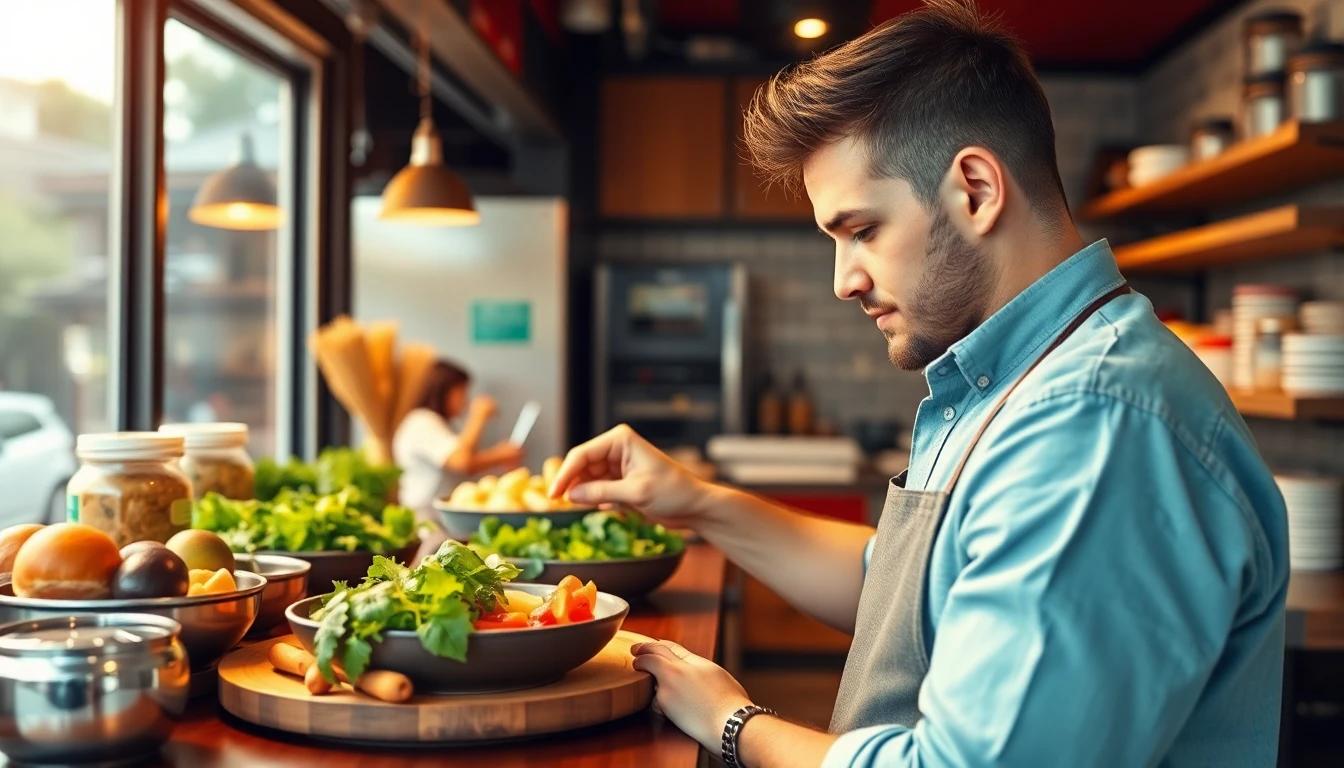
Your prep is content that restaurants with four walls cannot make. You are working in a compact space with everything happening in frame: the mise en place on the shelf, the griddle surface a foot from the camera, the folding and wrapping that happens at volume.
Shoot it vertical, tight, and without narration. Let the sounds of the kitchen do the work: sizzle, chop, crinkle, pour. Keep it under 30 seconds. The algorithm measures completion rate. Short videos that people watch all the way through perform far better than long videos they abandon.
The best hook for a process video is to start mid-action. Do not open with your face or an introduction. Open with the moment the protein hits the flat-top. Open with the knife moving through prep. The viewer has to catch up to what is already happening, and that curiosity buys you the first 3 seconds, which is all you need.
3. The Reaction Moment (You Cannot Manufacture This, But You Can Be Ready for It)
The customer who drove 40 minutes after seeing your video. The person who shows up every Tuesday. The kid trying your spicy option for the first time. The line forming faster than you expected. The "SOLD OUT: see you tomorrow" sign going up.
These are the moments that share. They share because they are true, and TikTok's audience, which is allergic to anything that feels produced or scripted, responds to truth at a cellular level.
You cannot plan these moments, but you can keep your phone accessible and film them when they happen. A 10-second clip of a genuine reaction outperforms a carefully shot promotional video almost every time.
4. The Comment Reply Video (Most Food Trucks Ignore This Entirely)
TikTok lets you reply to a comment with a video. The comment appears as an overlay while you answer it on camera. TikTok then distributes that reply video to everyone who saw the original post, plus anyone else who has shown interest in food content.
Every week, pick your two or three best comments and answer them on camera. "What's your most popular item?" Film the answer at the truck, during service, with the item visible. "Do you do catering?" Film the answer with the truck in the background and a real answer about how it works.
This format does three things: it makes the person who asked the question feel seen (and likely share it), it adds genuine information that converts curious viewers into customers, and it signals to the algorithm that your account generates conversation, which the algorithm treats as a quality indicator.
The Weekly Schedule That Doesn't Add Hours to Your Day
You don't need a production team. You need a phone, a mount if you want both hands free, and about 15 minutes of filming per day. Here's what that looks like:
Monday–Friday (operating days):
- Before 10 a.m.: Location drop. 15 seconds. Address, two shots of the food, hours on screen.
- Mid-service (11:30 a.m.–1 p.m.): One process video or one reaction moment, depending on what happens.
Saturday:
- A "week in review" compilation: your best 4–6 clips from the week, cut together in 45–60 seconds. These consistently outperform one-off posts because they compress the best moments and give new viewers a fast sense of who you are.
Sunday:
- Optional. Behind-the-scenes prep content (restocking, planning the menu, getting the truck ready) performs well because it shows the work that makes the food possible. People connect with effort.
That is a maximum of two clips per day, most of which are filmed during time you were already spending at the truck.
The Thing That Kills Food Truck TikTok Accounts
You post a video. You walk away.
TikTok's algorithm scores engagement velocity in the first 30–60 minutes after posting. If nobody likes or comments in that window, the algorithm concludes the content is weak and stops distributing it. If people do engage, it widens the reach.
So stay on the app for 20 minutes after you post. Reply to every comment, even with a single word. This keeps the engagement clock running and signals to TikTok that your content is generating interaction, which it will reward with more distribution.
88% of small businesses reported that TikTok promotions led to higher sales. The ones who didn't see results almost certainly posted and disappeared.
One More Thing About the Algorithm
TikTok does not care how polished your video is. It cares whether people watch it all the way through and whether they do something (like, comment, share, follow) afterward.
The most effective food truck TikToks right now look exactly like what they are: a person at work, making food, in a real place. No jump cuts timed to the beat. No color-graded lighting. No trending audio shoehorned in. Just the truck, the food, and whoever is holding the phone steady enough to film it.
That is your advantage. Use it consistently.
Managing TikTok alongside Facebook, Instagram, and your other platforms takes time you don't always have. ForaPost creates AI-powered content from your brand materials and publishes it across TikTok, Instagram, Facebook, LinkedIn, and more, so you can stay consistent without staying glued to your phone. Run it fully autonomous or review every post before it goes live: your choice. Start free →
Ready to put your social media on autopilot?
Join thousands of small businesses using ForaPost to grow their online presence with AI.
Start FreeFrequently Asked Questions
Why Food Trucks Have an Unfair Advantage on TikTok?
The TikTok algorithm does not distribute content to your followers first. It tests your content with a small batch of strangers and expands reach based on completion rate, engagement, and re-watches.
What is the four content types that actually work?
You do not need to reinvent content daily. You need four reliable content formats in rotation.
What is the weekly schedule that doesn't add hours to your day?
You don't need a production team. You need a phone, a mount if you want both hands free, and about 15 minutes of filming per day.
What is One More Thing About the Algorithm?
TikTok does not care how polished your video is. It cares whether people watch it all the way through and whether they do something — like, comment, share, follow — afterward.
What is the thing that kills food truck tiktok accounts?
You post a video. You walk away.
Related Posts
How Independent Coffee Shops Can Win Against Starbucks on Social Media (It's Easier Than You Think)
Why independent coffee shops beat Starbucks on social media, and the local staff, regulars, and sourcing content that turns neighbors into daily customers.
Sep 5, 2026
Social Media for Dessert Shops: Your Product Melts in 4 Minutes. Your Content Shouldn't.
Social media for ice cream shops and dessert businesses: the 10-second photo shoot, three content types that drive foot traffic, and a year-round plan.
Aug 14, 2026
Craft Brewery Instagram: The Content Strategy That Turns Tap Room Visitors Into Regulars
The best brewery Instagram accounts are not beer advertisements. They are documents of a place, a craft, and a community. The accounts that generate...
May 26, 2026